VICTORY IN JAPAN DAY – 15 AUGUST 2020
Deputy Lieutenants, Moray Councillors, Members of the Royal British Legion Scotland, Ladies and Gentlemen.
Thank you all for coming to commemorate ‘Victory in Japan Day’.
I have been asked to say a few words about the Campaigns that involved the Japanese forces.
In 1939 at the beginning of the Second World War in Europe, Japan wished to expand into China and to curtail the influence of the United States of America in the Pacific and to obtain a local source of oil in the Dutch East Indies.
To this end Japan signed a Pact with Germany and Italy in September 1940. However, it was not until over a year later in December 1941 that Japan attacked the United States’ naval base at PEARL HARBOUR in Hawaii, as well as other of their Pacific island bases. This brought the United States into the Second World War.
At the same time as Pearl Harbour was attacked, parts of the British Empire in South East Asia were also attacked and were forced either to surrender or retreat: namely Hong Kong on Christmas Day 1941, SINGAPORE in February 1942, and MALAYA.
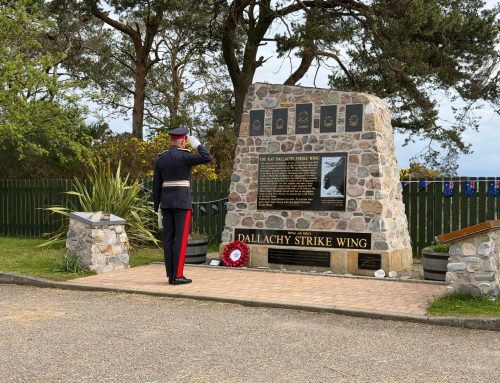
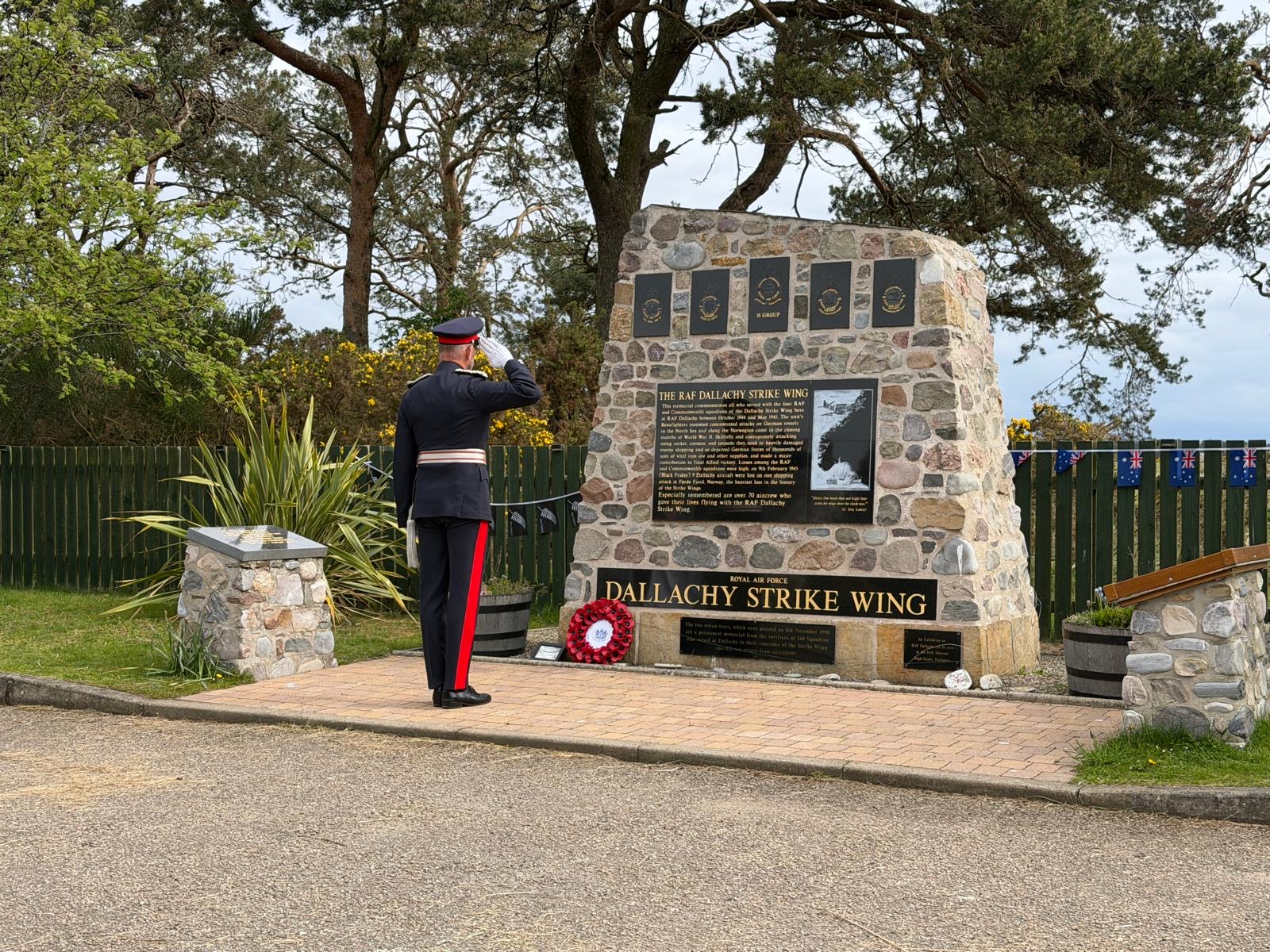
It is most fitting that the salute today is being taken by the grand-daughter of the Governor of Hong Kong, who had to surrender to the Japanese.
The British Empire forces involved were made up of troops from Britain, India, Africa and other Dominions and colonies. Many troops were captured and spent the rest of the War in captivity, often in appalling conditions. Some of them became ‘forced labour’, for example on the BURMA RAILWAY.
The United States recovered rapidly from the attack on Pearl Harbour and undertook major naval engagements, such as THE BATTLE OF MIDWAY in 1943. The latter was the turning point. In addition, there were a many island battles across the Pacific, including Iwo Jima, which United States forces won.
The British Empire forces, following their initial defeat by the Japanese, managed to retreat from Malaya into India by April 1942, just before the monsoon began. The subsequent BURMA CAMPAIGN was dominated by the tropical climate and the jungle covered mountainous terrain. The Burma Campaign was very complex and involved help from Chinese troops and the United States. There were some early British successes in 1942 and 3 involving THE CHINDITS. However, it was not until March 1944, after much fighting, that the Japanese invasion of India was defeated by the 14th ARMY at KOHIMA and IMPHAL. The 14th ARMY, which was known as The Forgotten Army, forced the Japanese to retreat by the end of 1944. The 14th Army then re-occupied Burma and liberated Rangoon (now Yangon) by May 1945. From a local Regimental perspective, units from the Seaforths, the Camerons and the Gordons were all involved in the BURMA CAMPAIGN.
The successes by Allied troops against the Japanese in Burma and in the Pacific did not cause the Japanese to surrender. Even the devastating bombing raids made on the Japanese mainland by the United States, did not force their surrender.
The United States dropped the first ATOMIC BOMB used in conflict on HIROSHIMA on 6 August 1945. However, Japan did not surrender until 15 August 1945, following not only a second atomic bomb being dropped on NAGASAKI on 9 August but also the entry of the Soviet Union into the War against Japan in Manchuria. The number of Japanese casualties and the amount of damage became unsustainable.
Today 75 years later, it is against this background of the War against Japan, that we are here to commemorate all those troops and civilians of many Nations, who died or suffered, in the hope that such a war can be avoided in the future.
Address by Dr Timothy Finnegan( Brig Retd, Late RAMC) as President of the RBLS Forres Branch.